Fri Oct 9 · The Bitter End · Greenwich Village
The Kolker
Experience
A limited-capacity room on Bleecker Street. A great band that has played it for years. Twelve dollars and forty two cents.
- WhereThe Bitter End, 147 Bleecker St
- WhenFri Oct 9, doors 10:30PM
- Ticket$12.42 all in
- Age21 and over
Nothing added at the door. Two minutes from the B, D, F, M and the 6.
- Limited capacityThe room holds 230. Every seat is close, and when it is full it is full.
- Since 1961The Bitter End has not moved and has not been turned into a lounge.
- $12.42The whole ticket, fees included. Nothing extra at the door.
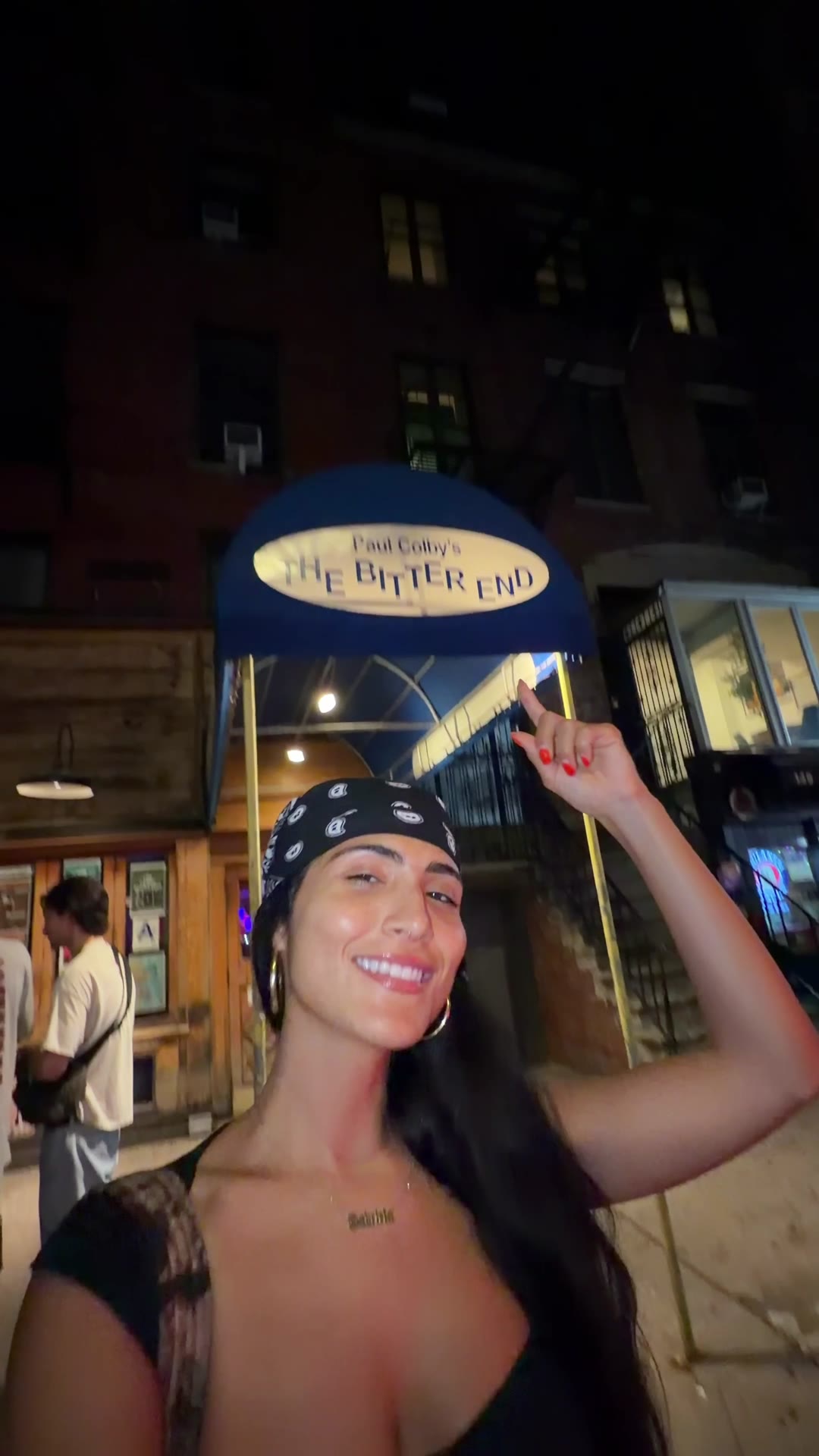
Someone who actually went
"Whether you come alone, with friends, or with your significant other, I highly recommend it."
Gabriela · The Bitter End, Bleecker Street
She had not heard of Kolker before that night. She filmed the walk in, the room, the band and the people around her, and gave it five stars at the end.
Watch it before you read anything else on this page. Fifteen seconds of somebody else's Friday tells you more than a description of it can.
All of them played this stage. Most of them before anyone knew the name.
Hear it before you buy
One song. Then decide.
The whole album plays right here, no app and no sign-up. Mission is nine songs, and it is the polite version. Live in that room it is louder, rougher and considerably better.
If one song does something to you, the live show will do more. If it does nothing, close the tab and keep your twelve dollars. We would rather you find out now than at the door.
What you get for it
Twelve dollars and forty two cents.
Worth being specific, because a price like that makes people assume it is a small thing. It is not. Here is the whole of it.
A full set from a great New York bandNot an opener and not a short slot. Kolker and a full band of first-rate players, working through his own material.
A seat in a limited-capacity roomThe room holds 230 people. No screens, no barricade, no upper tier, no bad seat.
The new album played liveMission, nine songs, out now. Louder and rougher in the room than on the record.
A band you can actually talk toThey are at the bar afterwards. There is no line and no wristband.
A proper 21 and over roomA grown-up crowd who came to listen, not a crowd talking over the band.
Two minutes from three subway linesB, D, F, M at Broadway–Lafayette and the 6 at Bleecker. No car, no bridge, no parking.
Sixty-five years of the room itself147 Bleecker Street since 1961, and it still looks and sounds like it did.
Twelve dollars and forty two cents is not what a night like that is worth. It is just what he charges. The bar is what keeps it there, which is also why there is a drink minimum. More on that further down.
About the hour
Nothing worth remembering in this city has ever started at seven.
Think about the nights here you still tell people about. None of them were scheduled around a seven o'clock curtain. They happened late, they were not especially planned, and they were usually somewhere small.
A seven o'clock show is an errand. You watch the clock at work, you rush dinner or skip it, you sit down just as the day catches up with you, and you are home by half nine having technically gone out.
Eleven o’clock is the other thing entirely. Everything before it still belongs to whoever it already belonged to. Eleven belongs to you. Do whatever you were going to do with your evening, unhurried. Then a door on Bleecker Street, a room with a band in it, and the good part of Friday still ahead of you rather than behind.
- Until 7
Your Friday, exactly as you were already going to spend it. Nothing gets moved.
- 7 – 9
Dinner, drinks, a friend's place, or nothing at all. Entirely up to you.
- 9 – 10:30
Make your way down to Bleecker Street whenever you feel like it.
- 10:30
Doors. You walk in off Bleecker Street and find a seat.
- 11:00
The band goes on. This is the part you came for.
- ~1:00
Out and on the train with a much better Friday behind you than the one you had planned.
You are not giving up your evening for this. You are giving it an ending.
The obvious objection
You can hear the songs at home. It is not the same thing.
Everything on the album is on your phone already. Here is what is not:
- The guitar tone in the actual air of the room, not through a kitchen speaker.
- What a band plays differently when they can see your face.
- The half second of quiet right before a solo lands.
- Two hundred people reacting to the same thing at the same moment.
- Talking to the guy who wrote the song, at the bar, twenty minutes after he played it.
None of that survives a stream. It is the entire reason to put your shoes on.
Who is usually in that room
Six kinds of people, each there for a slightly different reason.
-
People who love live music properly.
You have sat through enough mediocre bar bands to know the difference inside of a bar. This is not that. Kolker plays with some of the best musicians in this city, in a room built for listening rather than for shouting over. That combination is rarer here than it should be.
-
People who like finding things first.
Not a stadium act, not a name you already know. A great band playing a small room for twelve dollars, which is exactly the point at which these things are worth finding.
-
Guitar players, singers, and anyone who has been in a band.
Sit near the front. Watch the left hand, watch the interplay, watch what a rotating cast of genuinely excellent players does when they are given room to move.
-
People taking someone out.
Two tickets is twenty five dollars. A table in a dark old room, a couple of drinks, a band playing a few feet away, and something to actually talk about on the walk home. It is a far better date than another restaurant, and it costs a fraction of one.
-
People who love old New York.
Bleecker Street has changed almost beyond recognition. This room has not. Dylan, Curtis Mayfield, Stevie Wonder, Norah Jones and Lady Gaga all played this stage, and it is still open and still cheap.
-
People who just want a good Friday.
A completely acceptable reason. Doors at half ten, band at eleven, home with a story. No planning required beyond this page.

Who you are going to see
He has played this room for years and still treats every Friday like it is the one that counts.
David Kolker is a blues rock guitarist, singer and songwriter based in New York. He picked up a guitar at five and never really put it down. He and his band have played The Bitter End long enough that it feels less like a booking and more like a home game.
The songs are his own, and they are personal ones. Love, heartbreak, and the wreckage in between. The sound is straight ahead rock and blues with American roots running through it, not locked to either.
He plays with a revolving crew of first-rate musicians, players who work all over this city, so the band is genuinely not the same twice. Some nights that means a different feel on a song you have already heard. It is why regulars keep coming back to a room they have been to plenty of times.
The playing is not in question. These are serious musicians and it shows from the first bar. What people mention afterwards is something else. It is that he means it. He is up there giving a Friday night everything he has, in a small room, for a couple of hundred people. Then he is at the bar afterwards talking to whoever wants to talk, and he is exactly as warm off the stage as he looks on it.
Where
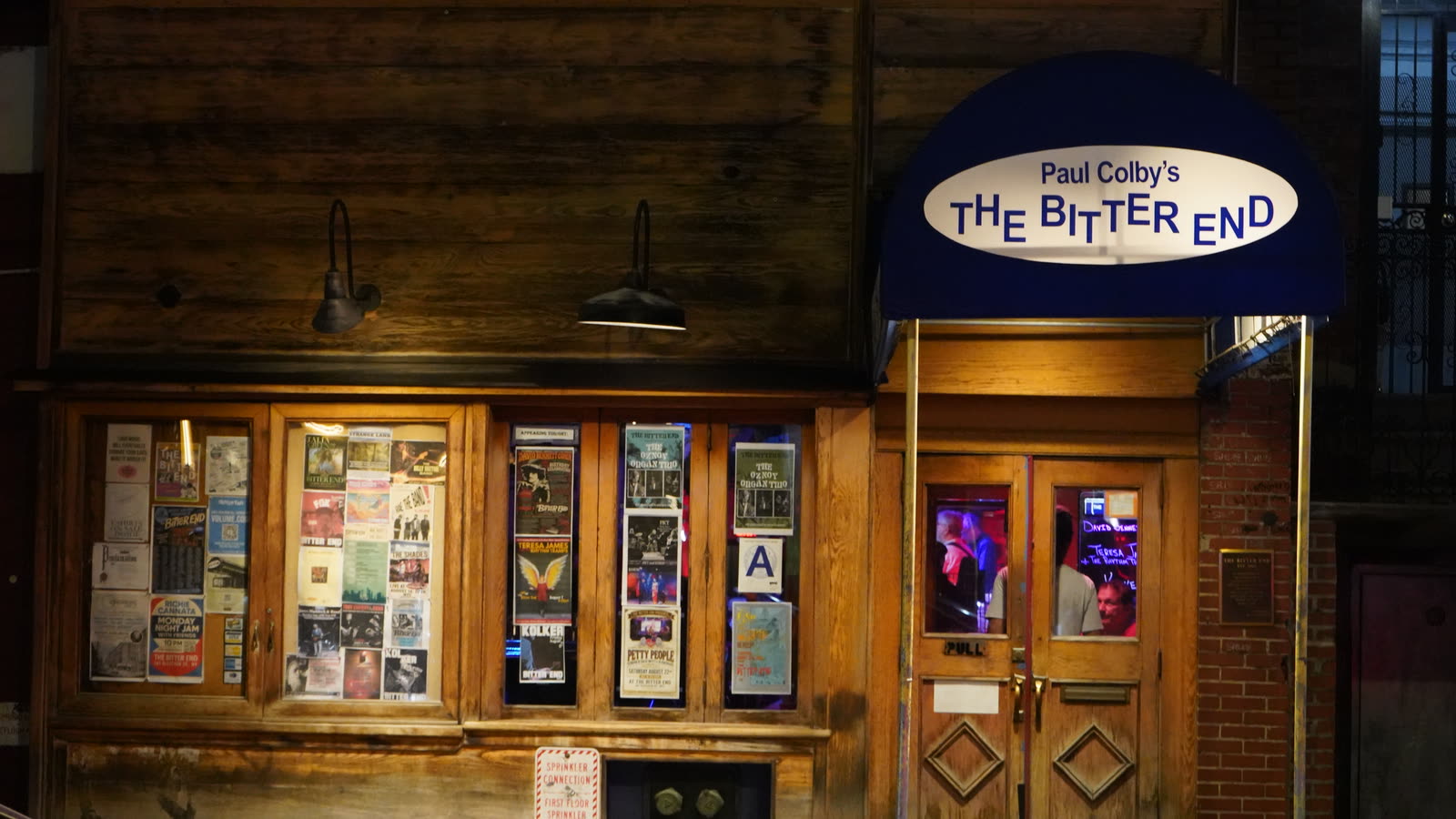
The oldest rock club in New York City.
The Bitter End opened at 147 Bleecker Street in 1961 and has run ever since, with live music nearly every night across rock, blues, jazz, funk and singer-songwriter bills. Bob Dylan played this stage. So did Curtis Mayfield, Stevie Wonder, Norah Jones and Lady Gaga, most of them long before anyone knew the names.
Bleecker Street spent sixty years turning into something else. This room did not follow. Same brick wall, same low stage, same limited capacity it has always had.
So the ticket is not only for a band. It is a night in the room where a lot of this city's music actually started.
Straight answers
Four things worth knowing before you book.
-
You have never heard of him.
Neither had most of the people in that room the first time they walked in. That is what the album at the top of this page is for. One song costs you nothing and answers the question better than any biography.
-
You do not think you like blues.
Most people who say that are picturing something slower and older than this. It is guitar-driven rock with blues and American roots underneath, played loud by a band that can really play. Play thirty seconds of the record and judge it on that instead of the genre label.
-
There is a drink minimum.
Two per person at the tables, one at the bar, and it does not have to be alcohol. A coke counts. That is the trade that keeps the ticket at twelve dollars, because the bar is what keeps a room like this alive.
-
It is a 21 and over room.
Bring ID. Beyond that, bring whoever you like: a date, a friend, three friends, or nobody at all. Plenty of people come on their own and end up talking to somebody by the end of the night.
From the room
There's something rare about watching a musician who actually means it. Kolker is that.
Bitter End audience, NYC
Brought three friends who'd never heard of him. All three were asking when the next show was on the way out.
Show attendee
The kind of show you text people about afterward. Just go.
Fan, Greenwich Village
- —Days
- —Hrs
- —Min
The room only holds so many.
Two hundred and thirty people, and that is the ceiling. The players change from one show to the next, so there will be other nights, but there is no second run at this one with this band in front of whoever ends up sitting next to you.
Twelve dollars and forty two cents. Around here that is a beer and some change.